Published on 02/01/2026 in SyriacPress by Iyad Boustany
The proposed federal system for Lebanon seeks to organize the country’s pluralistic social fabric by empowering local communities to manage their own affairs within a framework that preserves state unity and stability. This article represents a practical step toward understanding how federalism can move from a theoretical concept to a tangible solution that delivers a peaceful conflict resolution framework in a multi-cultural society.
The proposed federal system begins with the recognition that Lebanon is composed of multiple nations (the Lebanese constitution uses the word “millet” which is an ottoman word for “nations”) and diverse civilizational groups, each with its own national narrative, history, cultural references, worldview and unique way of life. This pluralism is not to be understood merely as a religious divide, but more as “identity” developed over centuries to become an established reality.
Accordingly, the federal system aims to organize this pluralism rather than attempt to negate it. Political cohesion is not built by imposing a single, centralized model of governance on diverse communities, but by empowering these communities to manage their own affairs within a unifying framework.
In this context, federalism is viewed as a human right, rather than a temporary whim. Every civilizational group has the right to choose a system of governance that reflects its social values and to organize its educational, economic, cultural, security, and sovereign affairs. As Pope John Paul II relentlessly affirmed, “people have the right to perpetuate their history”.
Subsidiarity and Solidarity
Such a system is based on bottom-up power devolution, meaning that authority is exercised at the lowest possible level and transferred to a higher level only when the lower authority deems it necessary. This principle, known as the “principle of Subsidiarity”, constitutes the backbone of any successful federal system.
Solidarity, meanwhile, represents a cornerstone of federalism no less important than the “Subsidiarity” principle outlined above. The principle of solidarity requires a mechanism for wealth redistribution whereby certain resources are transferred from wealthier villages to less prosperous ones. This ensures that all areas benefit from local wealth, promotes equal opportunities for prosperity and well-being, supports balanced development, and enables all communities to participate meaningfully in progress and growth—thereby strengthening local cohesion and stability and reducing economic disparities between neighboring municipalities.
The Three Levels of Governance
1-The Municipal Level
The proposed federal system is based on three integrated levels of governance: the municipal level (municipal residency), the cantonal level (cantonal citizenship), and the federal level. Municipal residency entails specific rights and obligations, just as cantonal citizenship and Lebanese nationality.
Every Lebanese citizen is entitled to benefit from the rights – and is required to comply with the corresponding duties- by virtue of their registered place of residence, their cantonal affiliation (i.e., citizenship), and their Lebanese nationality.
The Municipal Level: The Core of the System
Municipalities constitute the foundational cell of the federal system, transferring decision-making to the level closest to the citizen, where public affairs are managed by the local community itself. This ensures greater effectiveness, direct accountability (direct democracy in a referenda system), and a genuine sense of belonging, ownership and responsibility.
Municipalities are therefore not merely administrative units subordinate to the central authority, but local political entities vested with broad powers to manage citizens’ daily affairs. These powers include urban planning, public services, local taxation levels and local development, the right over natural resources, as well as local judiciary and security matters. This framework enables local authorities to address challenges in accordance with the specific characteristics of each area, away from uniform centralized solutions that have proven ineffective in multi-cultural societies.
The municipal council is elected by all registered residents (within the municipal boundaries), regardless of their cantonal citizenship. This reflects the functional character of the municipality and embodies the concept of actual residency and participation in local life. Candidacy for municipal office (and any public office in the Municipal or cantonal administrations), however, is restricted to cantonal citizens of the canton to which the municipality belongs, thereby ensuring the preservation of local identity, an organic link to the municipal community, and accountability by those who are an integral part of it.
Multi-Order Scaling up
The approximately 1,300 municipalities in Lebanon also enjoy the capacity to “scale up” when needed to deliver on infrastructure needs and public good. For this they can cooperate with one another and are allowed to establish flexible, ad hoc municipal unions (“multi-order”) to launch joint projects in accordance with their economic and developmental needs, without the need for permanent association. This flexible model enhances integration among regions and reinforces localism as a key entry point for balanced development, while respecting the particularities and autonomy of each municipality, within the legal framework of the canton to which it belongs.
2-The cantonal Level: The Unit of Self-Governance
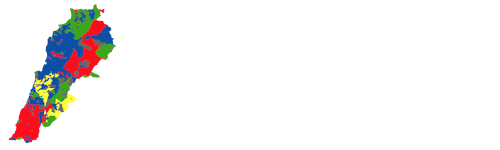
The federal system is composed of four cantons representing Lebanon’s principal millet/national communities: Christian, Sunni, Shiite, and Druze. Each one of the 1,300 municipality will be allocated to one of the 4 cantons. Municipal affiliation with these cantons is determined according to clear and precise demographic criteria, designed to reflect actual social realities and to guarantee a fair, stable, and sustainable presence for each component.
Any municipality whose original constituents belong for more than 67 percent to one millet/nation is affiliated with the relevant canton. The same goes for those municipalities whose constituents leading millet ranges between 51 percent and 66 percent, while the second-largest group accounts for less than 25 percent, the municipality is likewise affiliated with the canton of that leading group. In other cases, the municipality is classified as a “administrative case” (and there are less than 100 in Lebanon), and its status is addressed through one of two ways: either a local vote to determine cantonal affiliation (with the canton reserving the right of refusal), or the adoption of an administrative–constitutional settlement that takes into account the municipality’s local and historical particularities (such as municipal split, among other measures).
This framework reflects the principle of representative justice and affirms that the formation of cantons is grounded in concrete social and demographic realities rather than theoretical assumptions or top-down interests.
The canton constitutes the core unit of political governance within the federal system and enjoys broad sovereign powers in managing its internal affairs. These include legislative, executive, and judicial authority; the drafting of its own cantonal constitution; the organization of its elections; the management of the local economy, education, and culture; the administration of defense and security; and the collection of cantonal taxes and other service levies.
Finally, each canton elects its own parliament, elects a prime minister, forms a ministerial council, and establish an independent judicial authority. This enables the full exercise of power and guarantees genuine autonomy for each internal entity, while simultaneously preserving the cohesion of the federal system as a whole.
3-The Federal Level: Shared Sovereignty
The role of the federal level is limited to the management of shared sovereign matters that cannot be addressed at the local or cantonal levels. These include foreign policy, the declaration of war and peace, border defense, diplomatic representation, and monetary policy.
Federal decisions are taken through a presidential council (also referred to as the federal government) composed of the heads of government of the four cantons (the four prime ministers). Each member holds a right of veto, meaning that any decision related to foreign policy, war and peace, or monetary policy must receive the approval of all four cantons in order to ensure consensus and safeguard the interests of every component.
The federal executive authority consists of the 4 prime ministers of the four cantons, with the presidency of the federation rotating annually among them.
The four cantonal parliaments meet to form the federal parliament, which is composed of all deputies elected each within their respective cantons, each of whom becomes de facto and de jure a member of the federal parliament. Its role is advisory to the federal government.
The federal judiciary, for its part, has jurisdiction exclusively over cases and disputes involving the federal administration.
On Security and Defense
A unified federal army (armée de métier) would be established to protect the borders of the federal state, while a national guard specific to each canton would be created to manage internal security and maintain local stability. This force would also serve as a federal reserve army (armée de réserve). All armed forces would be subject to coordinated training aimed at enhancing interoperability among the different forces, ensuring effectiveness and rapid response to any external threat, and reflecting a balance between local autonomy and state unity.
Conclusion
Lebanon stands at a historic crossroads, and federalism represents a decisive strategic choice for survival and renewal. This system is not merely a political theory, but a realistic and practical framework that protects rights, guarantees justice, and prevents any single component from monopolizing power.
We can no longer continue to submit to a failed, centralized, unitary system that has produced chaos and left the state incapable of protecting its citizens socially, culturally, militarily, or economically. The success of the federal project, however, requires genuine participation: political engagement, public awareness, popular mobilization. It requires from each and every one of us to engage as a soldier in the raging merciless cultural struggle shaking and shaping our times.
The time has come to adopt federalism. Every passing day carries a heavy cost: for the Christians, a step closer to disappearance and extinction, and for other communities—Sunni, Shiite, and Druze alike- perpetual underdevelopment and a continuous cycle of hatred, and resentment in an enduring lawless state.