
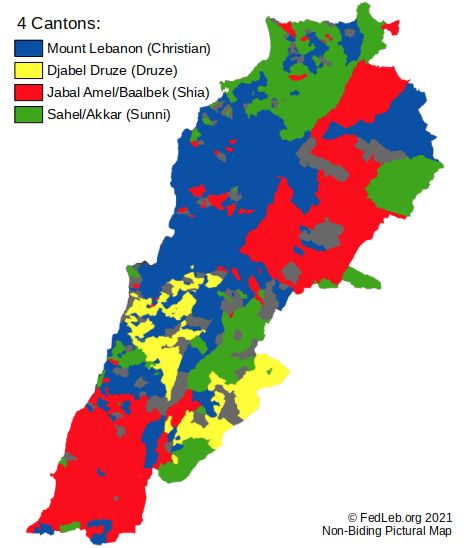
The federal project for Lebanon starts from the premise that the country is inherently plural, composed of distinct nations/communities whose coexistence cannot be sustainably managed through forced centralization.
It proposes a political architecture that recognizes this reality by granting meaningful territorial self-rule through autonomous cantons exercising legislative and executive authority over local matters. At the same time, a lean federal state is preserved, retaining core functions such as defense, foreign policy, and monetary stability.
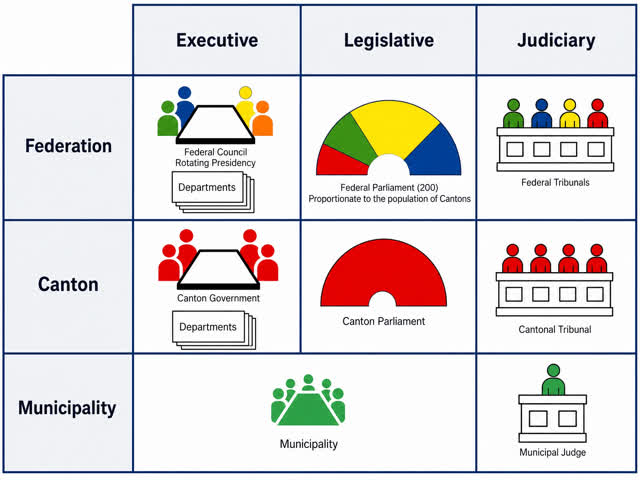
The system is grounded in subsidiarity, ensuring that decision-making occurs at the most local level capable of handling it, thereby enhancing efficiency and accountability. Fiscal solidarity mechanisms are maintained to preserve federal cohesion and narrows structural inequalities between regions. Democracy is thus relocated closer to citizens, where representation is more direct and less distorted by federal-level ethno-sectarian bargaining. Federal institutions act primarily as coordinators and arbiters rather than dominant central authorities.
By redistributing power territoriality, the model aims to neutralize zero-sum competition over central control. It seeks to replace entrenched clientelism with accountable, performance-driven governance at the local level. Ultimately, the project offers a reconfiguration of the state that combines unity with diversity, aiming to stabilize coexistence and ensure long-term political and economic viability.

Iyad Georges Boustany
The author of the project