The Eastern Question
The Eastern Question is a conflictual situation which dominated the international diplomatic scene over the past four centuries, geographically stretching from the Caucasus down to Egypt at the cultural frontier where European Christianity meets Ottoman Islam. At the heart of that question lies Lebanon.
With the weakening of the Ottoman Empire and the emergence of the organic nationalistic movements, many of these conflictual situations erupted in sectarian nationalistic conflicts and often outright wars. The conflicts ultimately got settled in one of two ways: transfer of population like in Armenia, Turkey, Greece, or partition like Cyprus, Yugoslavia, Balkans.
The Eastern question is that of the model that would ensure a peaceful, prosperous and equitable livelihood for diverse multicultural populations. And that is the essence of the problem of Lebanon. To resolve the problem of Lebanon, and yet not in partition nor in displacement of populations, is the essence of the federal project.
Historical Context of Lebanon’s Crises
Over the past 100 years, the centralized political system proved to be a permanent cause for continuous crisis and wars.
After a long period of peace and development abruptly interrupted by World War One, came the 1926 ill-suited centralized Constitution which negated Lebanese diverse ethnic social fabric. The centralization was further reinforced with the 1943 constitutional quid pro quo: not Arab, not European – two negations don’t make a nation. This led to the 1958 Civil War and later the infamous 1969 Cairo agreements, and finally the 1975 to 1990 disastrous Lebanese Civil War.
The ensuing 1989-2023 peacetime proved even more disastrous than the violent era, as further social and economic wealth was destroyed than during the Lebanese Civil War.
Early Constitutional Experiments
Following the collapse of the ancient regime princehood in 1842, Lebanon adopted its first constitutional regime.
Between 1843 and 1860, the constitution of Mount Lebanon was based on geographic federalism called Kaymakamateen. It divided Mount Lebanon into a northern region and a southern region, which resulted in enclaved minorities being oppressed that ended with massacres.
In 1861, a constitution called Réglement Organique or the 1861 Protocol was adopted. It is a form of ethnogeographic federalism that was called Mutasarrifiya, a bottom-up approach that recognized millets as nations, empowered municipalities, and allowed various ethno-religious communities to choose their own representatives in the governing body.
Lebanese Dual Identity
Lebanese carry a dual identity: an organic identity represented by their ethnocultural and historical heritage, namely Sunni, Shia, Druze and Christians – sect being identity not faith – and the contractual identity: Lebanese.
The problem of Lebanon is the mismanagement of its ethnic diversity, and this is resulting in endless permanent state of wars and conflicts. The solution to the problem is bottom-up ethnogeographic federalism.
Two Types of Federalism
There are two major types of federalism: geographic and ethnogeographic.
Geographic Federalism
Geographic federalism is a tool for optimal governance in a monocultural society. In a multicultural society, geographic federalism would result in the oppression of the local minorities and their exodus, as it will indiscriminately apply the rule of majority over minority across the ethno-sectarian lines. Democracy being the tyranny of the majority.
Ethnogeographic Federalism
Conversely, ethnogeographic federalism is designed to optimize governance and prosperity in a multicultural setting and ensure that enclaved populations are given the opportunity to live in accordance with their cultural beliefs.
The Proposed Federal Structure
Cards of Belonging
Each Lebanese will benefit from three kinds of affiliation or belonging: the Lebanese ID card, the cantonal citizenship card, and the municipal residency card. Each card comes with its specific set of rights and obligations.
Administrative Division
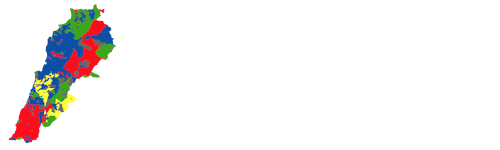
Each of the 1,302 municipalities that form Lebanon is affiliated to a canton. The cantonal geography is delineated by the agglomeration of these municipalities.
Freedom of Choice
Any Lebanese can freely elect his principal residency in any municipality. And where one elects his principal residence, one pays his taxes and votes to elect the municipal council irrespective of one’s cantonal citizenship.
Government and Parliament
Citizens of a canton will vote to elect members of cantonal parliament and the governor of the canton. The governor will form the cantonal government and seek a vote of confidence from the cantonal parliament. cantonal MPs will join to form the federal parliament, whereas four elected governors will form federal government.
Presidential Council
The presidential council will be formed by the four governors of the four cantons for a period of four years. Each of the governors will become president for one year, and all decisions by the federal council will be taken by unanimous vote.
Fundamental Principles of Federalism
Principle Number One: National Narratives
Lebanon is a multinational country. The various populations adhere to different national narratives. The community is the encapsulation of the individual and collective identity. Hence, sect is identity, not religion nor faith.
Principle Number Two: Self-Government
As in Europe, the application of “governed and governor have to be of the same faith” is a cornerstone for secularism, accountability and development. Enabling each community to freely choose its own leaders and its governance system is the recipe for peace, stability and development.
Principle Number Three: Subsidiarity and Localism
Bottom-up power devolution is the basis of governance. Each municipality will be asked to choose its governance model and its cantonal belonging. Municipalities shall decide how and when to combine their resources and scale up in promoting public good.
Principle Number Four: Solidarity
Development of one municipality must have a spillover effect to drag along surrounding municipalities as much as possible.
Principle Number Five: cantonal Sovereignty
Legislative elections are cantonal. Any federal decision that conflicts with cantonal decision is not enforceable on the canton that doesn’t accept it.
Principle Number Six: Structure
Municipal, cantonal and federal are three preset governance levels. Case-by-case cooperation models between municipalities form the variable leg of the model.
Principle Number Seven: Governance
All federal authorities are modeled on the basis of a governing council in which the representatives of each canton have a seat.
Principle Number Eight: Direct Democracy
To keep elected representatives in check and to control project by project, communities will periodically express their approvals or rejections of decisions in municipal, cantonal and federal referendums. Any decision made by the municipal council could be put to referendum if so required by a specific percentage of voters. The referendum can either confirm or annul the municipal council decision.
The Roadmap
Our roadmap to promote federalism is through communication, education and debate to sharpen the project and fine-tune its details, framing the project as an inclusive project suited for all ethnic groups and communities in Lebanon.