The Eastern Question and the Future of Lebanon
The Great Eastern question is a conflictual situation stretching from the Caucasus down to Egypt at the cultural frontier where European Christianity meets Ottoman Islam. The conflicts ultimately got settled in one of two ways: transfer of population or in partition. To resolve the problem of Lebanon, not in partition nor in displacement of populations, is the essence of the federal project.
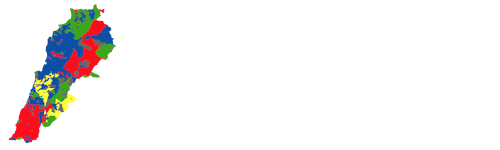
Following the collapse of the ancient regime Prince Hood in 1842, Lebanon adopted its first constitutional regime. Between 1843 and 1860, the constitution of Mount Lebanon was based on geographic federalism, called Kaimakamate. It divided Mount Lebanon into a northern region and a southern region, each governed by a sect, but each having serious enclaved minorities within it. A childish marble game in summer 1859 triggered a chain of events which ended in the 1860 bloodbath.
In 1861, a new constitution was adopted. It is a form of ethnographic federalism that was also called Mutasarrifate. It was extremely successful until it was rescinded by the Ottoman Empire in 1915. The proverbial peace and development under this governance model was summed up with one sentence.
After World War I, greater Lebanon adopted in 1926 a new constitution, a centralized and unitary political system that negated Lebanon’s diverse ethnic social fabric. The unitarian and centralized nature of the regime went from crisis to crisis: from the 1937 history book clash to the 1943 ludicrous quid pro quo “not Arab, not European,” which then led to the 1958 civil war, followed by the infamous 1969 Cairo agreements, and then the 1975 to 1990 Lebanese civil war. We were told the war ended and the constitutional reforms and amendments finally gave each its fair share. The Taif Accords kept the 1926 model—centralized and unitarian—but shifted power from one millet to another. This only added insult to injury, as the worst was yet to come. The 1990 to 2024 so-called “peace time” proved even more disastrous than the various wars, as further environmental, social, and economic wealth was destroyed than during the violent episodes.
From this quick overview of Lebanon’s three constitutional experiences since the end of the principality, one can depict two eras of instability and one of peace and development. Indeed, problems arise each time the political boundaries and the legal system failed to espouse the social fabric of the concerned constituencies.