

Speech by Iyad Boustany at the KAS – Ittihadiyoun conference on the challenges of citizenship in multicultural societies, 16 October 2026
1. Two Definitions
Let me start with two definitions, because the whole argument rests on them.
By “discriminatory law”, I mean any law, act, decision, policy or decree that a people sets for itself: rules put in place by the population concerned, to govern its own life and decide its own fate.
By “arbitrary law”, I mean any law, act, decision, policy or decree imposed on a population, often against their will, by others – an elite, a court, judges or another group – in the name of principles or in the name of a higher moral principle or a cause presented as morally superior like human rights, natural law, the rule of law, diversity, DEI, a religiously identified enemy, a territorial claim, historical legitimacy.
The test is simple: who makes the law, and for whom? If the people make it for themselves, it is discriminatory law. If others impose it on them in the name of principles, it is arbitrary law.
2. Why I Chose the Word “Discriminatory”
The word “discriminatory” carries a bad connotation. I chose it on purpose: to call on your critical thinking and to take you out of your intellectual certainties. We were all taught that what discriminates is bad and what unites is good. Our generation watched the end of apartheid in South Africa, Mandela walking free, and Band Aid, Bono and U2 promising to save Africa from famine with their songs. All this shaped our collective psyche. But does this display of virtue actually build a more peaceful, prosperous, just and open society? Nothing is less certain.
3. Every Law Discriminates
Is not every law discriminatory? In many countries, the tax you pay depends on your income bracket. In some federal countries, you vote only for the parliament of the canton, the Land or the region where you live; in others, your vote depends on the community you belong to by origin. The first rule discriminates by residence, the second by origin. When men are legally forbidden from entering women’s changing rooms, the law discriminates by sex. Across Africa, constitutions tie citizenship to race or ethnic origin: Liberia reserves it to persons “of Negro descent”, while Nigeria, Uganda and the Democratic Republic of Congo tie citizenship by birth to membership of an indigenous community or ethnic group.
There are thousands of such examples: laws that distinguish by sex, origin, social status, wealth, age or place of residence. Yet none of them is arbitrary, because each was adopted by the people concerned, for themselves. They are discriminatory laws – and that is simply what laws are.
The reason is structural. A law is a set of rights and obligations. Its first component is its scope: who enjoys the rights and who bears the obligations. By drawing that line, the law includes some and excludes others. Discrimination is built into every law. This contradicts the modern doxa – allow me to call it a fallacy – that we must remove all discrimination to build a just and equal society.
4. Natural Law versus Positive Law
This takes us back to the old debate between natural law and positive law. The natural-law tradition, from Aristotle and Thomas Aquinas to Locke, and up to the 1948 Universal Declaration of Human Rights, asserts the existence of universal rights. This raises two problems – I call them two curses. The first curse is the name. These principles are called “laws” and “rights” instead of ethical guidelines. Once a principle is called a right, it becomes a legal claim that any individual can raise against the community. This is where the danger lies.
The second curse is the conflict of authority. When a voted law and a general principle disagree, which one prevails? Pascal answered long ago: “Vérité au-deçà des Pyrénées, erreur au-delà” – truth on this side of the Pyrenees, error on the other. In social matters, truth is in the eye of the beholder. The law the people voted for themselves – discriminatory law – must therefore prevail. When principles prevail over it, we enter the realm of arbitrary law.
5. Arbitrary Law: Justice in the Name of Ideology
Arbitrary law is a system in which judgments are rendered not on the basis of the law enacted by the people, but in reference to an ideology, a belief or a dogma. Today, its most notable example is the system that claims to render justice in the name of “human rights”.
This model has changed over time. From the 1930s, Antonio Gramsci and the Frankfurt School started a long work of deconstruction. Adorno and Horkheimer, in Dialectic of Enlightenment, presented Western reason, traditions and institutions as instruments of domination. Later, Derrida and Foucault taught a generation that norms, categories and laws are tools of power, to be unmasked and dismantled. French theory then added the oppressor/oppressed variable. Constitutional systems kept the noble label of “human rights”, but the substance was gone.

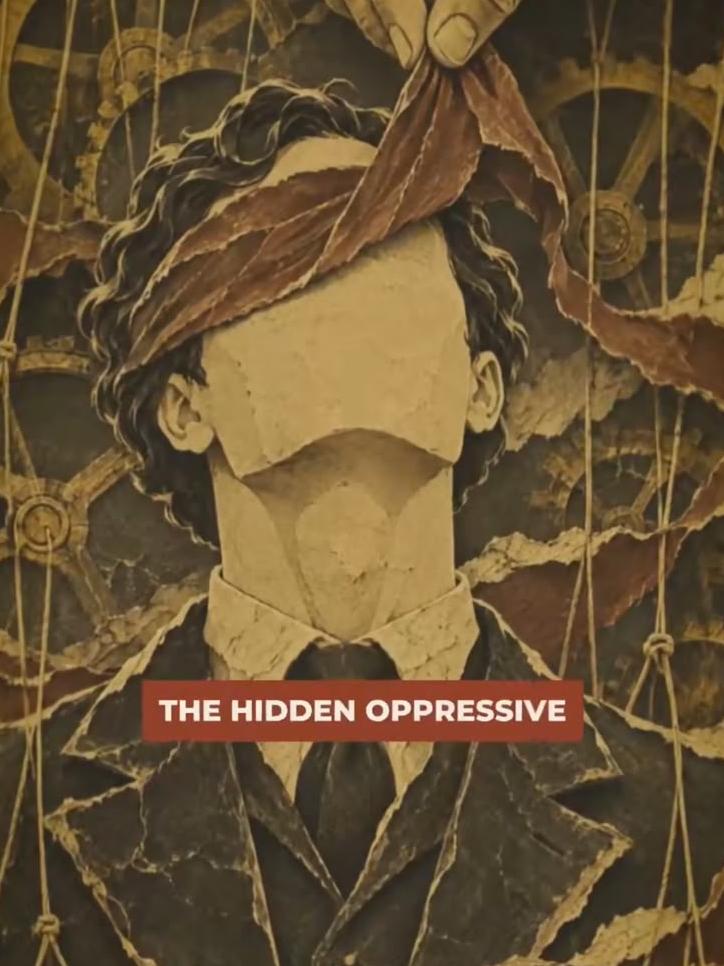
The blindfold of justice was removed. The question was no longer whether the defendant is guilty or innocent, but whether he belongs to the oppressor camp or to the oppressed camp. For the same facts, an offender labelled “oppressed” receives a milder sentence, and one labelled “oppressor” a harsher one. The judiciary sees itself as anointed with a mission: to correct the flaws of society, to repair an ontological injustice, to make amends for a selectively curated past – with no regard for the will of the people, and in the name of personal ideological choices. In doing so, it claims the moral high ground and calls itself “good” and “just”.
6. Arbitrary Law in the Courtroom
Some will be offended that I call this principle-based “rule of law” arbitrary. Let us look at the facts.
- Hamburg, November 2023. In the Stadtpark gang-rape case, nine young men, mostly of migrant background, were tried for the rape of a 15-year-old girl in 2020. Under juvenile law, eight of the nine received suspended sentences; only one went to prison.
- Hamburg, 2024. A 20-year-old German woman sent a WhatsApp message calling one of these rapists a “disgraceful rapist pig”. She was sentenced to a weekend in detention – more time behind bars than the eight rapists with suspended sentences. The court cited a previous theft conviction.
- Northampton, October 2024. After the Southport murders, Lucy Connolly, a British mother, was sentenced to 31 months in prison for a single post inciting racial hatred. She had pleaded guilty.
- London, August 2025. Labour councillor Ricky Jones said “we need to cut all their throats” about anti-migration protesters. A jury acquitted him of encouraging violent disorder after about thirty minutes. Lawyers argue that the charges differed from Connolly’s; the public saw two weights and two measures.
- Vienna, September 2025. In the “Anna” case, ten young men aged 16 to 21, reported to be of migrant background, were acquitted of all sexual charges involving a 12-year-old girl. The judge found her statements too contradictory. The verdict was not yet final.
- Rotherham, 2014. The official Jay Report found that about 1,400 children were sexually exploited between 1997 and 2013, mostly by men of Pakistani origin, and that the authorities often failed to act, partly out of fear of being called racist.
In each case, the written law is the same for everyone. What changes is how it is applied, depending on the label carried by the offender or the victim. The law voted by the people is set aside, and the outcome depends on who is seen as “oppressed” and who as “oppressor”. That is arbitrary law. As the popular saying goes: by being merciful to the culprit, one is cruel to the victim.
7. Arbitrary Law above the Nation: the European Example
The same pattern appears at the level of states. A referendum is discriminatory law in its purest form: a people deciding for itself. Yet in Europe, when the people vote the “wrong” way, the vote is repeated or bypassed.
- Denmark rejected the Maastricht Treaty in June 1992 (about 50.7% no) and voted again in May 1993, after opt-outs were added.
- Ireland rejected the Nice Treaty in June 2001 and voted again in October 2002. It rejected the Lisbon Treaty in June 2008 and voted again in October 2009.
- France (about 55% no) and the Netherlands (about 61% no) rejected the European Constitutional Treaty in 2005. Most of its content returned in the Lisbon Treaty of 2007, ratified by parliaments without new referendums.
- The Netherlands rejected the EU–Ukraine Association Agreement in April 2016 (about 61% no). It was ratified anyway in 2017, with an added interpretive declaration.
European courts, for their part, place principles above voted law:
- In Costa v ENEL (1964), the EU Court of Justice declared that EU law prevails over national law – the legal basis of every later conflict.
- In October 2021, the same Court fined Poland €1 million per day over judicial reforms voted by the Polish parliament. In February 2022, it upheld the mechanism that allows the EU to cut funds to Hungary and Poland over “rule of law” concerns.
- In Hirst v UK (2005), the European Court of Human Rights ruled that the British ban on prisoner voting violated the Convention. In 2011, the House of Commons voted to keep the ban.
- In Lautsi v Italy (2009), the Court ruled that crucifixes in Italian classrooms violated the Convention. Its Grand Chamber reversed the ruling in 2011, after many states protested.
- In Hirsi Jamaa v Italy (2012), the Court condemned Italy for returning migrants intercepted at sea to Libya. In June 2022, a last-minute order from the Court stopped the first UK deportation flight to Rwanda.
- In KlimaSeniorinnen v Switzerland (2024), the Court condemned Switzerland for doing too little on climate – three years after Swiss voters had rejected the CO2 law by referendum. The Swiss Parliament declared that it would not follow the ruling.
Each time, the will of a people, expressed by referendum or through its parliament, is overridden in the name of principles interpreted by a few. That is arbitrary law.
8. From “We the People” to “We the Principles”
Why does this happen? Because the social contract itself is being redefined. Western societies – more precisely, societies that are Christian in faith or in culture, including the Christian societies of the Levant and of Lebanon – are swept along by individualism and consumerism. The social bond is breaking down into grains of sand. Citizenship becomes transactional, held together only by taxes and papers – to the point that French political language now distinguishes between “Français de papier” and “Français de cœur”.

The liberal-progressive movement pushes this further. It atomizes society into undifferentiated, interchangeable individuals and consumers, and presents the protective shield of the community as backward. This raises the question of sovereignty. From Bodin and Hobbes to Carl Schmitt, sovereignty was the collective will of a people bound by a social pact. Modern liberal theory replaces it with an “individual sovereignty”, freed from the “tyranny of the group”. This is identity politics: each person is his own sovereign, armed with an ever-longer list of “human rights” that presents any authority as oppression and any control as a violation of rights. The individual reduces the world to himself; he has no collective destiny to serve and no common world to build. The communal right to rule is then denied by the very citizens for whom it was designed.
Here is the consequence for our two definitions. Discriminatory law needs a people: a group able to agree on common rules and to apply them to itself. An atomized society cannot do this, because it no longer produces a common will. The empty space is filled by those who speak in the name of principles: a small circle of liberal and progressive judges, the spiritual sons of Derrida, Deleuze and Foucault. Habermas gave this shift a name, “constitutional patriotism”: loyalty to universal constitutional principles rather than to a nation, a history or a culture. In other words, “we the principles” instead of “we the people”.
Hence the growing complaint of a “dictature des juges”, a dictatorship of judges. In today’s Europe, a handful of individuals decide which social media you may access – the battle over X – which television channel you may watch, and which candidate you may vote for: Fillon, whose campaign was sunk by a judicial investigation opened in the middle of the 2017 race; Le Pen, barred by judges from running for office for more than a year; Georgescu, whose election was annulled by a court and who was then excluded from the re-run. All in the name of human rights. “Il n’y a de pire dictature que celle prônée au nom du droit” – there is no worse dictatorship than the one preached in the name of the law.

The tension between individual rights and collective rights has always existed. As long as humans remain social animals, the rules of the group – its codes of conduct, its rights and obligations towards others – will limit the individual’s endless, narcissistic sense of entitlement. The real question is therefore: which tyranny are we willing to accept – the tyranny of the many, or the tyranny of the few?
9. “The Sword Is the Shield of the Law”
“Le glaive est le bouclier du droit” – the sword is the shield of the law. A first reading says that the executive power exists not only to apply the law, but above all to protect it. From what, and from whom? And who holds the sword? The sword is the sovereign: the people. This means two things. First, the law is the work of the social group, not a universal truth or a natural order. We may believe that all men have intrinsic, inalienable rights; others may believe otherwise; both views are equally legitimate. Laws are a social, cultural and civilizational construction. Second, the people must protect the law from subversion – from the concepts and ideologies in whose name some elites want to apply it.
In my book, I put it this way: “The foundation of a Republic is not based on force. The main attribute of power is legislation rather than force … Suddenly the sovereign’s weapon is no longer the sword, but the law which in Anglo-Saxon terminology is called ‘common law’: the law of the community, the law that is bestowed upon, and is common to, members of the community.” Therefore, “citizens have a duty to obey the law only insofar as it is morally unobjectionable (and formulated by a legitimate governor), meaning formulated in accordance with the general beliefs and the general standards of morality of the population on which it is applied.”
Today, the most harmful concept used to justify the tyranny of judges over their own population, in Europe as in Lebanon, is “universal human rights”. Under this doxa, rights – money, privileges, social welfare, lenient sentences – are granted to migrants while they are denied to the native population: clemency for the culprit labelled “oppressed”, harshness for the victim labelled “oppressor”.
When the sword shields the law, the law stays under the watchful eye of the people, lawfully organized as a society – even if it is not universal, even if it clashes with human-rights ideology. Such a law is certainly discriminatory, but it is the law of the land, and it reflects the will of the people. When the sword is removed, the rights and liberties of citizens fall into the hands of a few – judges, juries, the system – who rule on the basis of vague, supposedly virtuous ideals shaped by their own beliefs. That is arbitrary law. And it is most dangerous in a multicultural society.
10. The Multicultural Society: Everyone Is Someone’s Colonizer
In a multicultural society, communities have been colonizer and colonized in turn. In the Levant, the first colonization came with Alexander and the Greeks, then with Pompey and the Pax Romana and, from the seventh century, with the Arab-Islamic conquest led by Khalid ibn al-Walid. But each community remembers a different colonizer. For an Arab Muslim in Lebanon, “colonization” means the Western powers of the twentieth century. For a Maronite, it means the Arab-Islamic conquest. The oppressor/oppressed logic therefore works in both directions: each community sees itself as the victim of the other, and each claims special rights in the name of its painful past.
Lebanon’s remedy for this mutual wound was power sharing: a system discriminatory by nature, agreed by the communities themselves, so that no single group could dominate the central government. This is discriminatory law. It was turned into arbitrary law twice.
The first time, from the 1950s, the Sunni community, collectively and almost unanimously, imposed on Lebanon changes to its legal system that gave rights and privileges to its own camp only. The Cairo Agreement of 1969 gave the Sunni camp the right to carry arms – through the Palestinian armed factions it championed and every Lebanese movement that backed them – while the law denied this right to all other communities. In the name of a higher cause, one group of residents, Lebanese or not, provided they stood on the right side of the religious and political divide, was exempted from obligations such as taxes and utility bills, and given powers such as carrying weapons, imposing its own authority and raising levies. All this was denied to the other Lebanese – in the name of a “just cause”, of “human rights”, and of amends for the colonial past.
The second time came after the year 2000. As the Sunnis had done from the 1950s to 1990, the Shia invoked the same cause, presented as morally just and superior, to obtain special rights under the law: tax exemptions and coercive, quasi-sovereign powers. Both made sure their own war victims were compensated. Today, the Shia displaced from the South are partly compensated with public funds, while the other displaced of Lebanon’s wars never were.
In both cases, a shared rule, consented to by all, was replaced by privileges for one group, justified by a moral cause. That is arbitrary law.
11. Why Majorities Preach “Non-Discrimination”
In a multicultural society, people group together along community lines, not on the merits of the issue. Whatever the subject, they align by belonging, not by reason, interest or preference.
In a mono-cultural democracy, the social contract works because the minority accepts the rule of the majority. It accepts it because the majority changes from one issue to the next, and because all citizens share the same founding pact. In a multicultural setting this is no longer true: positions are taken along community lines, and the same majority wins every time. John Stuart Mill saw this clearly. In such a country, he wrote, each part follows its own leaders, and “the same books, newspapers, pamphlets, speeches, do not reach them. One section does not know what opinions, or what instigations, are circulating in another.” This negates citizenship and democracy, and challenges the rule of law.
This explains a striking pattern. In a multicultural society, the majority tends to be liberal and to denounce “discriminatory laws” in a virtuous tone, often to the applause of the “international community”, whatever that means. The minority tends to be conservative and to defend those same laws. The reasons given by the majority always sound good: to fight discrimination, to offer equal opportunities, to ensure equal outcomes, to be fair and generous. But under the veil of “non- discrimination” hides a predatory and hegemonic intent: that of a majority wanting to crush the minority.
The mechanism is simple. What a member of the majority loses in his own culture by being liberal, he wins back twice: first, through the rule of the majority, since he belongs to it; second, by weakening, in the name of democracy and liberalism, the cultural structures of the minority. The minority, in turn, clings to the multicultural model, because it shields it from a majority rule weaponized under the banner of democracy.
Lebanon proves the point. In the 1930s, the Christians, then the dominant group, proposed ending sectarianism in the allocation of government positions – a very liberal move at the time, aimed at a “discriminatory law”. Nearly a century later, the Christians, now a minority, oppose this same reform, while the overwhelming majority of Muslim members of parliament support it. The same is true of secularism. As I wrote: “those who preach secularism often do so with the aim of weakening the cultural bases of the other group and with the aim of better establishing their own domination over the central power … This weaponization of the ‘universal’ only masks a desire for domination.”
Here, arbitrary law does not come from judges, but from a majority that removes the protective, discriminatory rules of a minority in the name of universal principles. The tool is the same, and so is the result.
12. What I Am Not Saying
Please do not misunderstand me. I am not advocating any form of apartheid, nor a return to any unjust order. I am saying that laws are discriminatory by nature, and that people must therefore design them and apply them only to themselves and to the citizens who willingly adhere to them. To remove the discriminatory nature of the law in the name of universal principles is to remove the law itself, and with it the entire social order.
This is the dream of a “utopian reset”. As I wrote in my book: “The promotion of the ‘utopian reset’ is a deconstructionist model aiming to tear apart cultural heritage, perceived as slavery. The basic assumption is that the particularism of cultures proves their artificiality, hence the need to depart from these historical ties to recreate a transhuman, bound by his sole humanity to all the other individuals of human form.” But by cancelling culture, we also eliminate freedom, as Will Kymlicka has shown.
The warning is old. In the nineteenth century, Pierre-Joseph Proudhon gave the answer: “Whoever invokes humanity wants to cheat.” When a state or a group fights its political enemies in the name of humanity, it seizes a universal concept to justify any action against them, and depicts them as standing outside humanity. Humanity is not a political concept, and it has no place in political debate.
13. Conclusion: The Tyranny of the Many or the Tyranny of the Few
Discriminatory laws – as applied in Switzerland, Germany, Belgium, the United States, Australia or the UAE – are a blessing. They may amount to a tyranny of the majority, but that majority is the smallest homogeneous group of willing members, not an incoherent, heterogeneous mass. Arbitrary laws, claimed and applied in the name of moral principles and virtuous ideologies, are the tyranny of the few. This tyranny is particularly devastating in a multicultural society. And as we watch, every day, this beautiful country of ours spiraling into slow and certain decay, we can safely say that the road to hell is indeed paved with good intentions.